Tools That I Use
and where to get them…
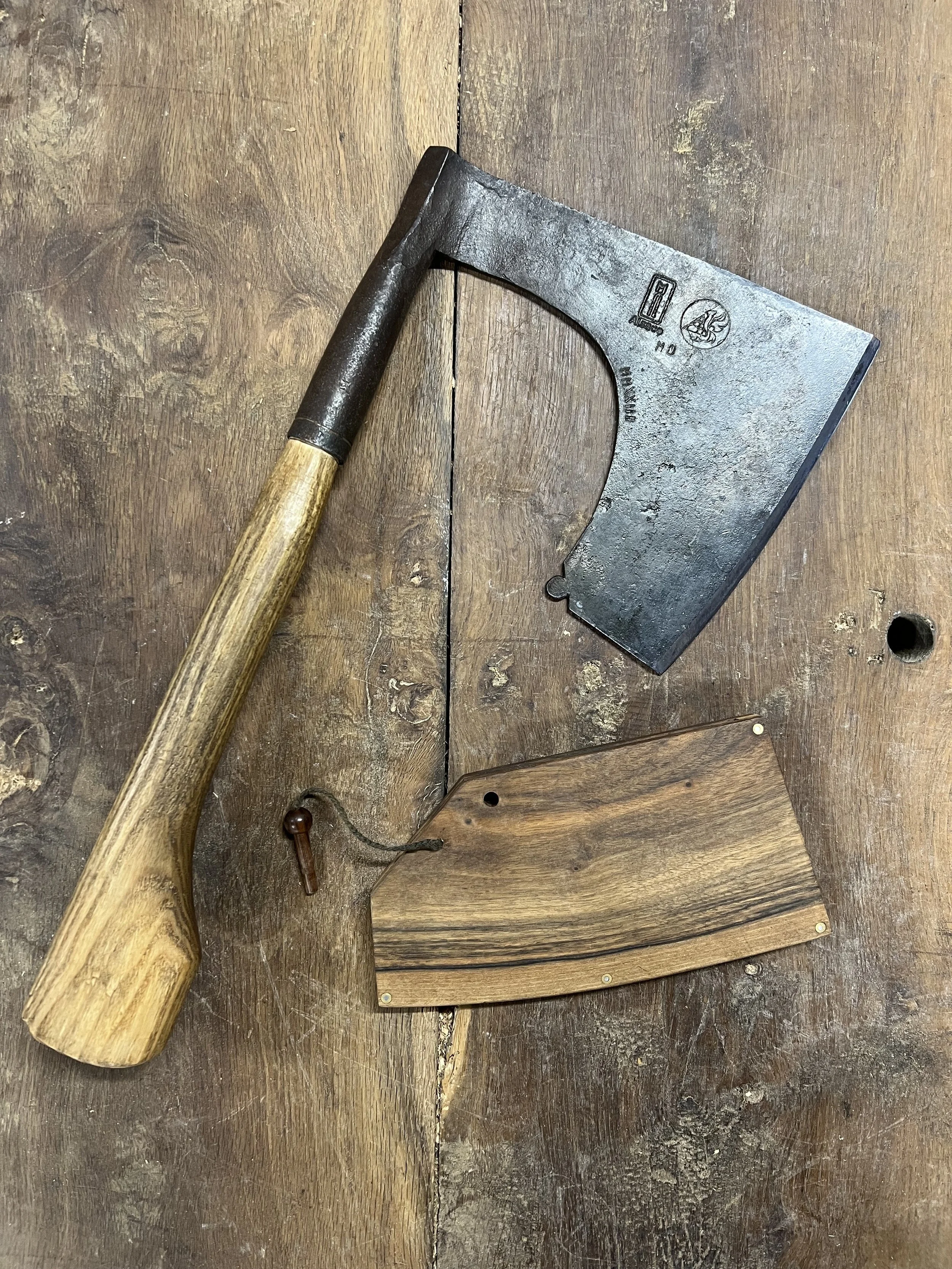
La Doloire Monument Historique (MH)
This axe was made by Simon and Soumia over at La Maison Luquet.
The shape can be traced back to illustrations from the 15th century.
It’s a single bevel, and a little over 2kg. I ordered this one after having a go on one that was made for the reconstruction of the nave of Notre Dame de Paris. My one has a couple of personalised features. The little rounded detail of the axe (the standard is a diamond) represents a unique 13th century detail that I recurved during the restoration. The other stamps are the makers mark; the date; my initials; and a special touch mark of a cathedral truss and phoenix for those who worked on that particular project.
Its my go-to axe for efficient hewing. The sheath is quite special too, made from walnut with iron and brass rivets: gorgeous!
11th Century Bearded Axe
This is a replica of an 11th century bearded axe found in Gothem, Gotland. This one was made by Gransfors Bruks in Sweden. Unfortunately, they no longer make these historical axes in general production, although we’ll be working with forges to make similar models. I really enjoy this axe for carving.
At 1.6kg its fairly light, but its ergonomic design makes it feel efficient, and the beard is great for choking up the handle for control.
I found the handle too long when I brought this axe and have since shortened it to better suite the angle of the cutting edge.
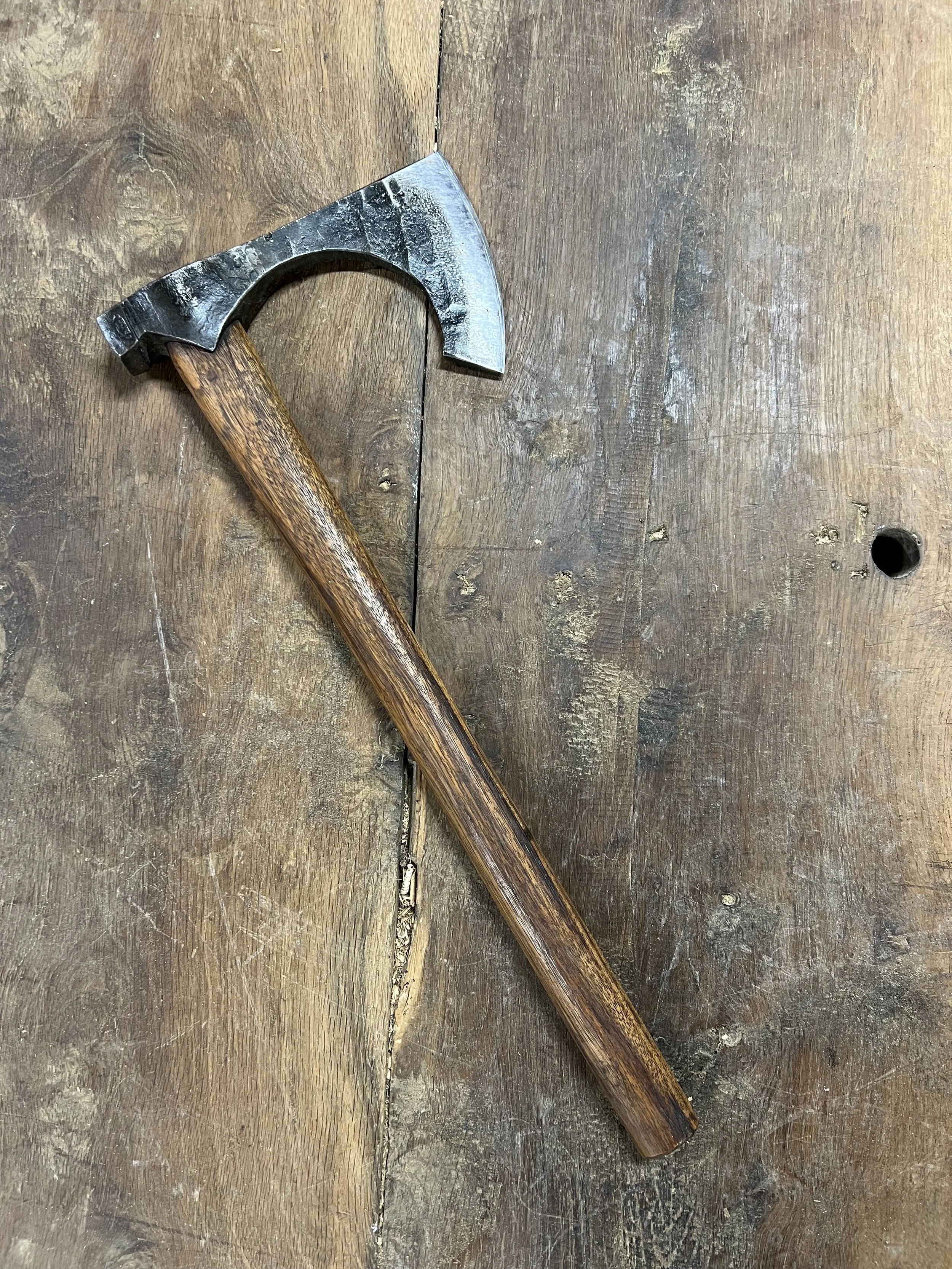
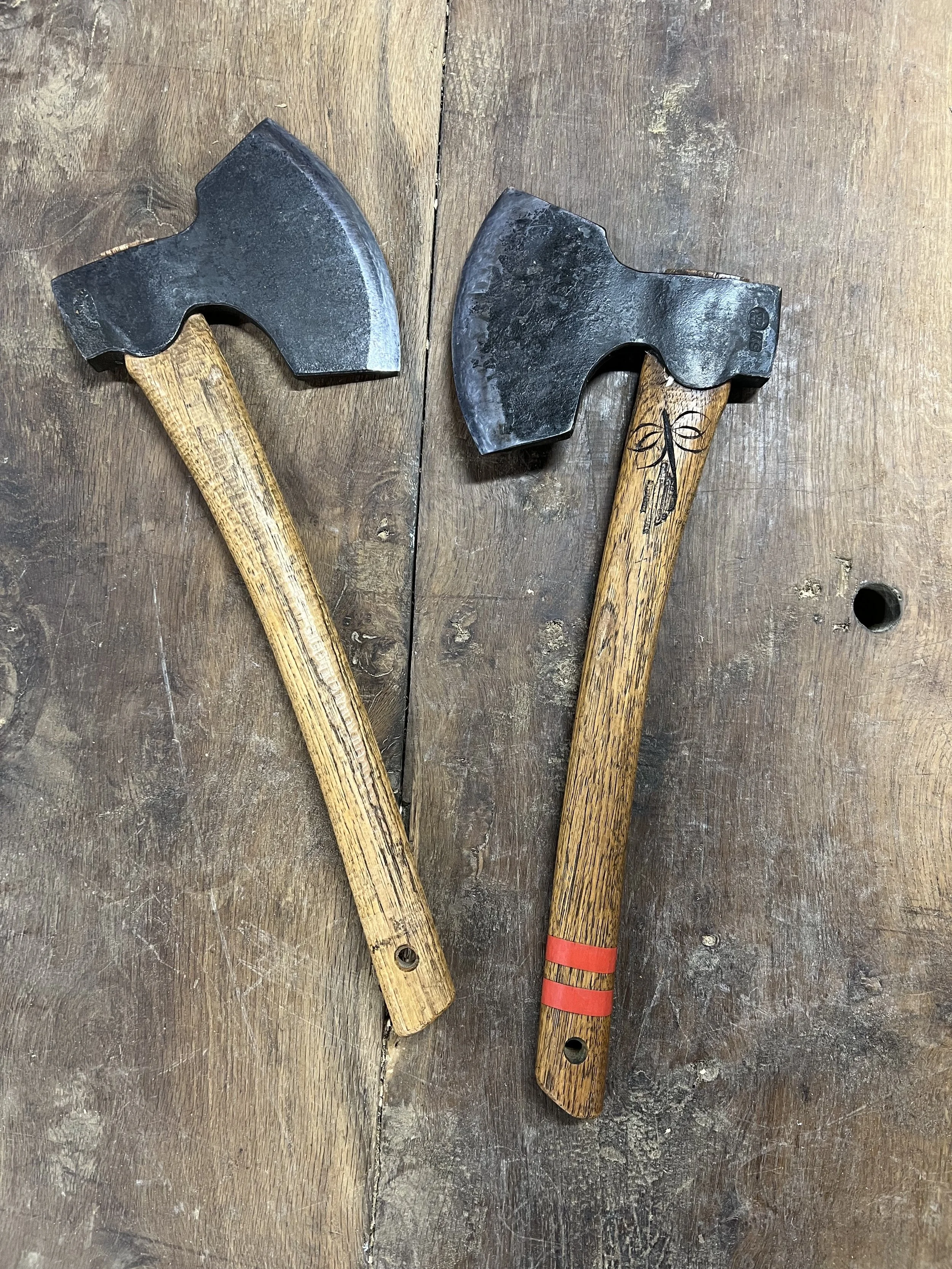
Broad Axe 1900
Here are two axes of the same type by Gransfors Bruks.
The one on the left is a double bevelled axe, while on the right we have a single bevelled axe with a cranked handle for a right-hander.
The single bevelled axe was my first axe suitable for hewing. The 1.6kg of steel is great for light-duty hewing or one-handed use for someone who has gotten used to the weight.
These are great for the learner and for someone who needs a multi-functional broad axe, however for someone looking at hewing a large amount of timber or working professionally, a larger axe would be more suitable.
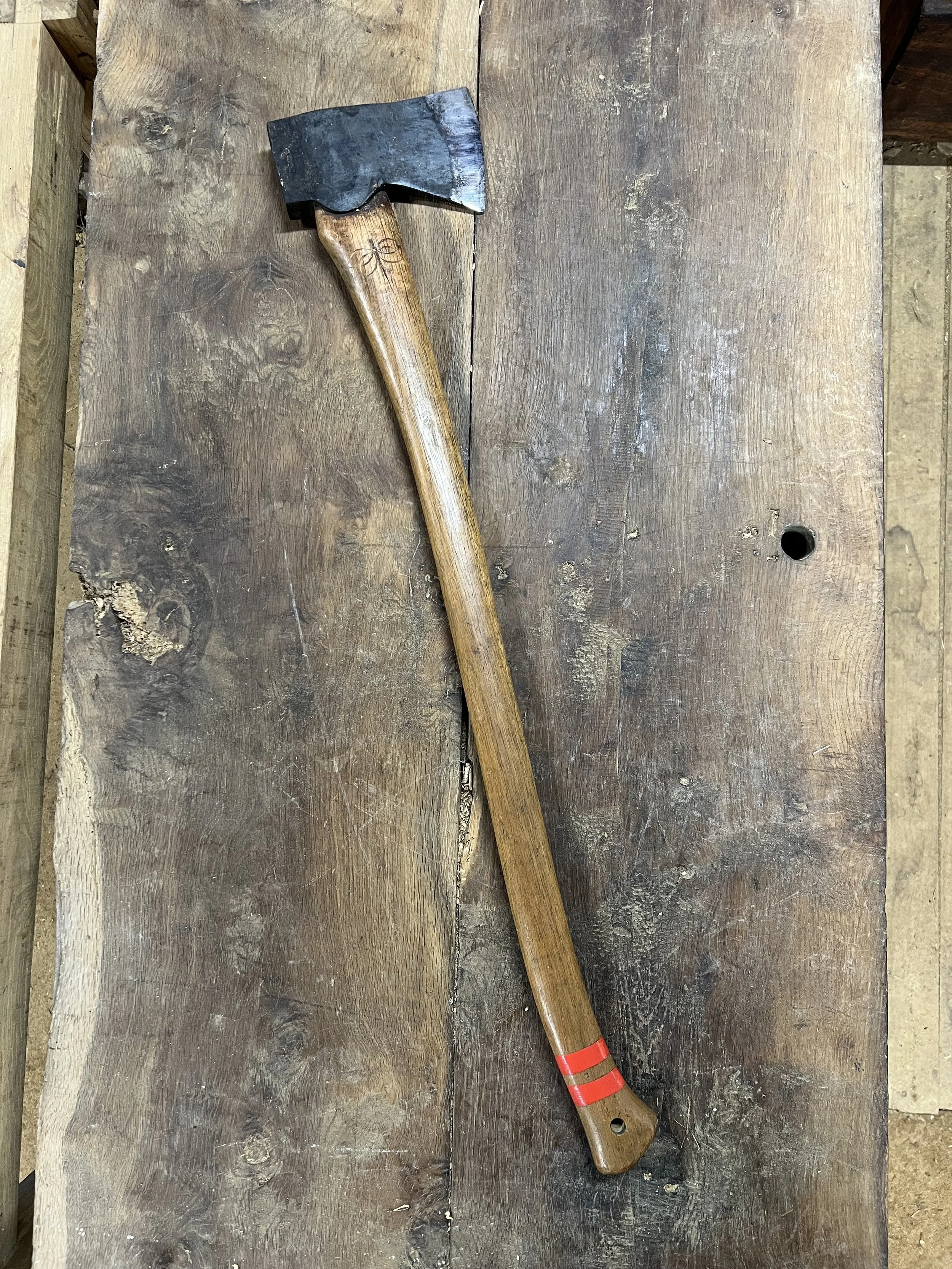
Felling Axe
Another Gransfors Bruks, this was my first axe suitable for working on the log during the hewing process to make notches.
It the long handled version of this axe and these days it is my travelling axe as it is easy to replace compared to my other antique axes that I use for this task.
A good axe for general tasks, although its light weight and fine angled cutting edge mean that it can have a tendency to get stuck rather than efficiently splitting off joggles (the pieces between the notches when hewing).
It should be noted that the cranked handle and modern shape makes it unsuitable for historical re-enactment.
Lining The Stuff
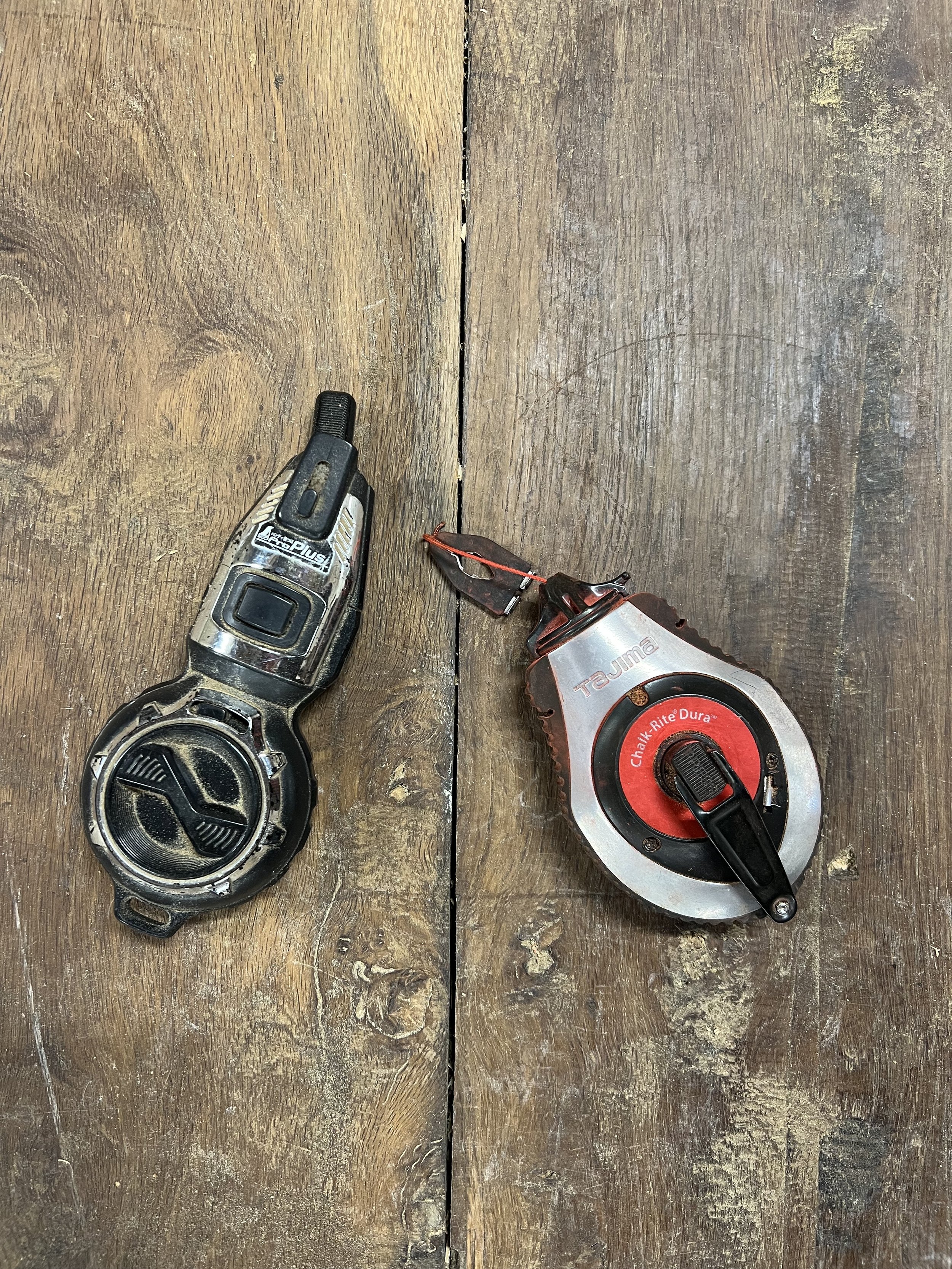
If a bit of carbon or red raddle on a string aren’t your thing, then here are the modern alternatives.
On the left is a Japanese ink line from Shinwa. I have a number of these in different colours, and they are what I tend to use in new builds.
On the right is a nice sturdy chalk line from Tajima. Again, I have several colours of chalk lines to suit the project.
A chalk line is what you’ll generally use for hewing timber.
Planes
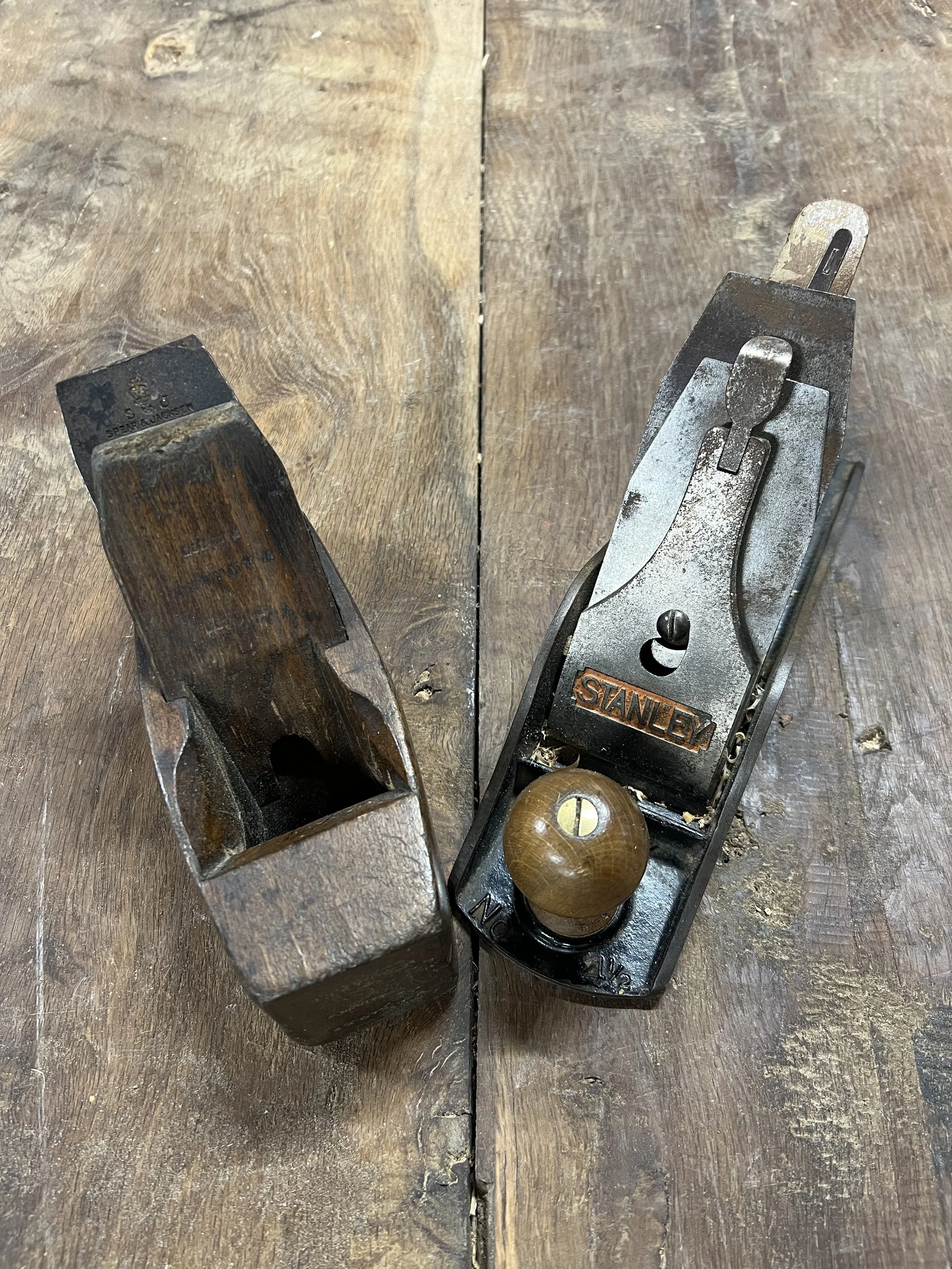
Keep an eye out for planes!
All of my most-used planes come from flea markets, charity shops or antique tool sellers.
On the left we have a wooden smoothing plane and on the right a Stanley 4 ½.
These, along with a small veritas block plane are used most of all in my timber framing work.
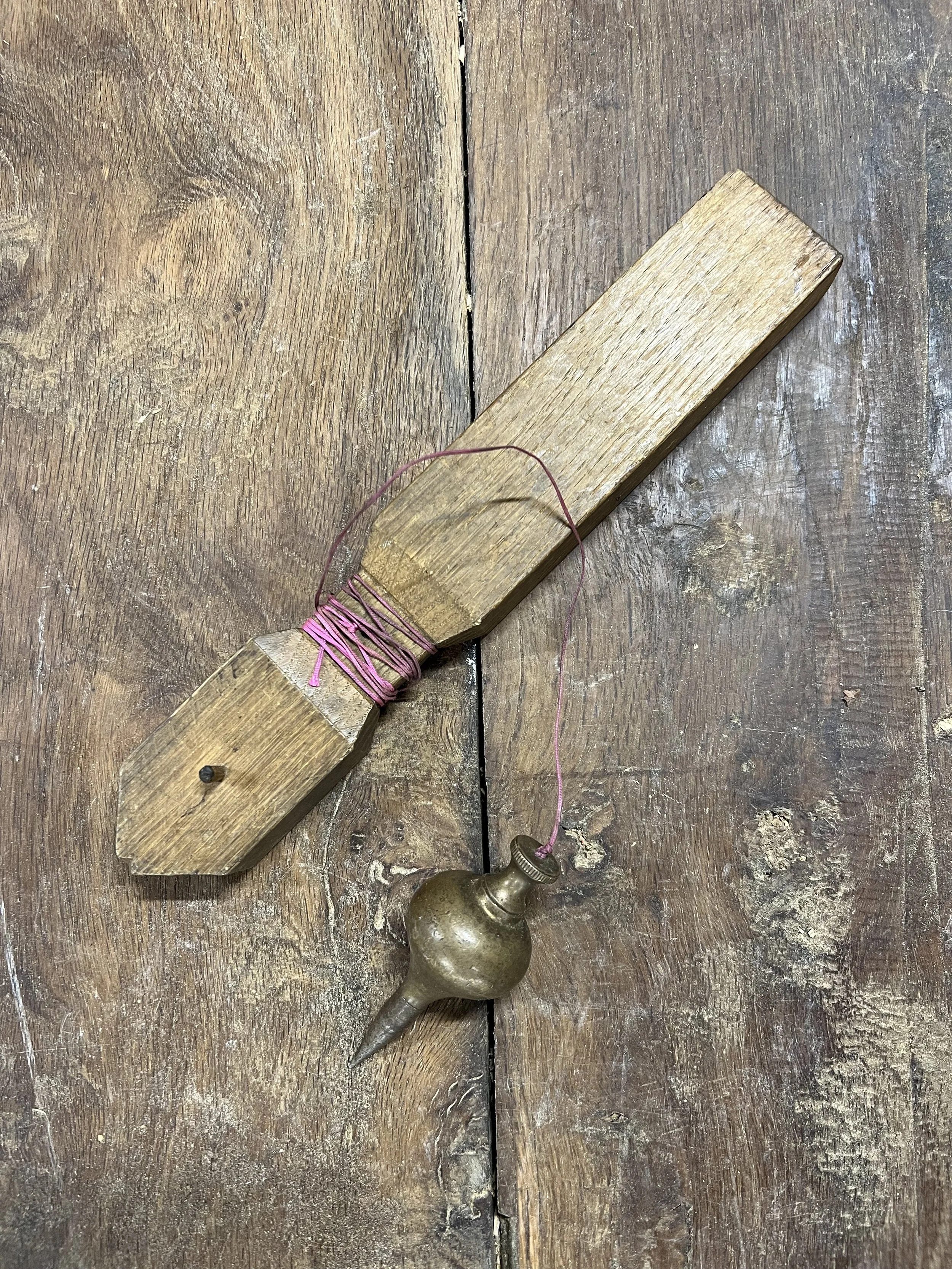
Plumb Bob
The indispensable tool of the traditional timber framer who works with fun shaped pieces of timber.
Keep an eye out at flea markets and online for nice ones. Although I’ve even used a stone on a piece of string before, old ones like this are not only pretty, but hang true quickly, even in a bit of wind.
You can make a little wooden support so that you can work hands-free when scribing. Make yours plain like this one or go crazy with all kinds of fun carvings. Pink string is optional (but easy to see)!
Form Square!
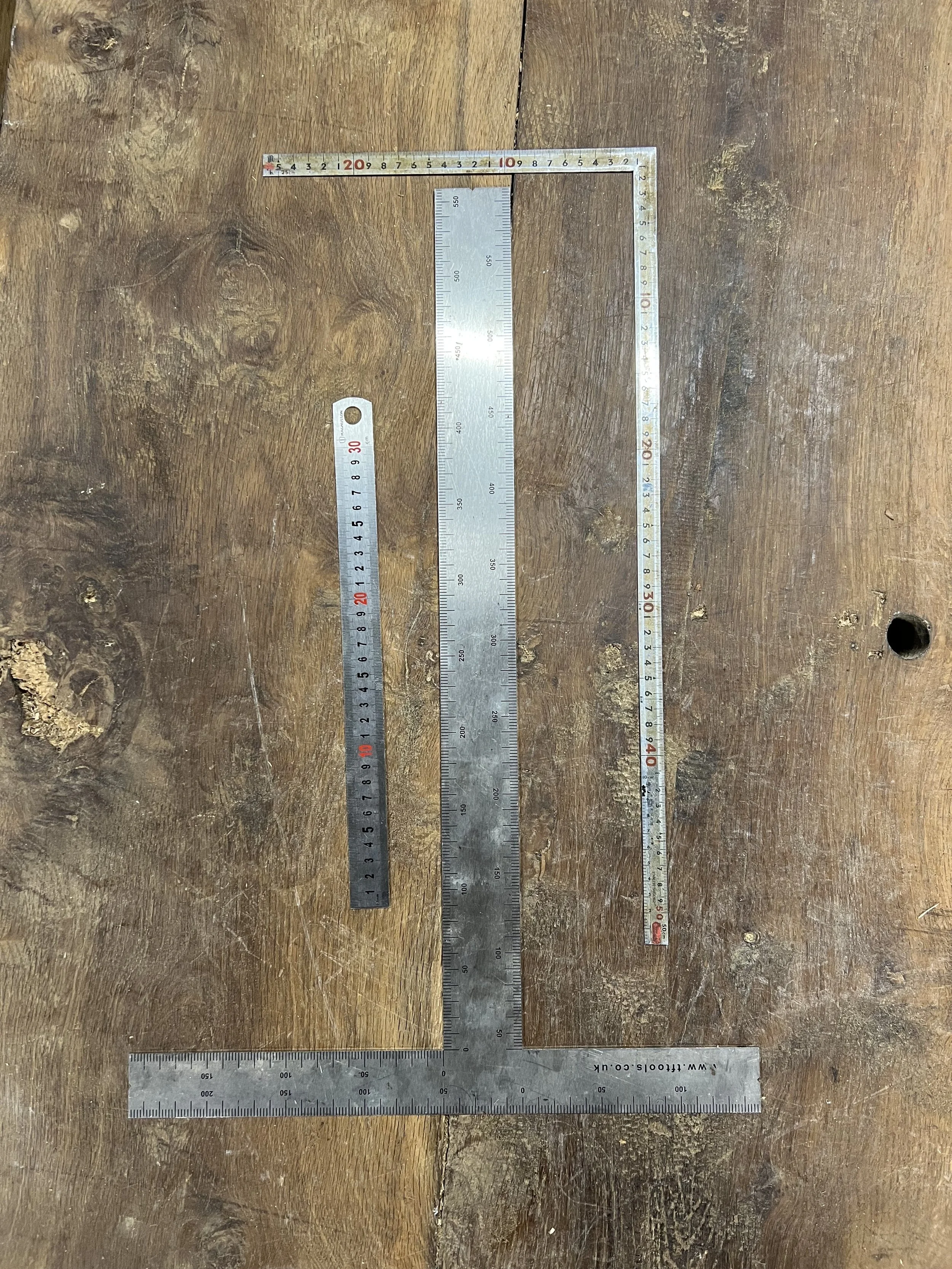
Measuring devices are particularly important.
You want to make sure that they all say the same thing too, for example, if you use a variety of tape measures, make sure that they are all of the same reputable brand.
Here we have a 300mm (1 foot) ruler; a Japanese square made by Shinwa; and a ‘T’-square.
This last one is great for lining up along your reference lines. Unfortunately, this one is not made anymore, but we will see what we can do to persuade someone to make more if there is sufficient interest.
Froe
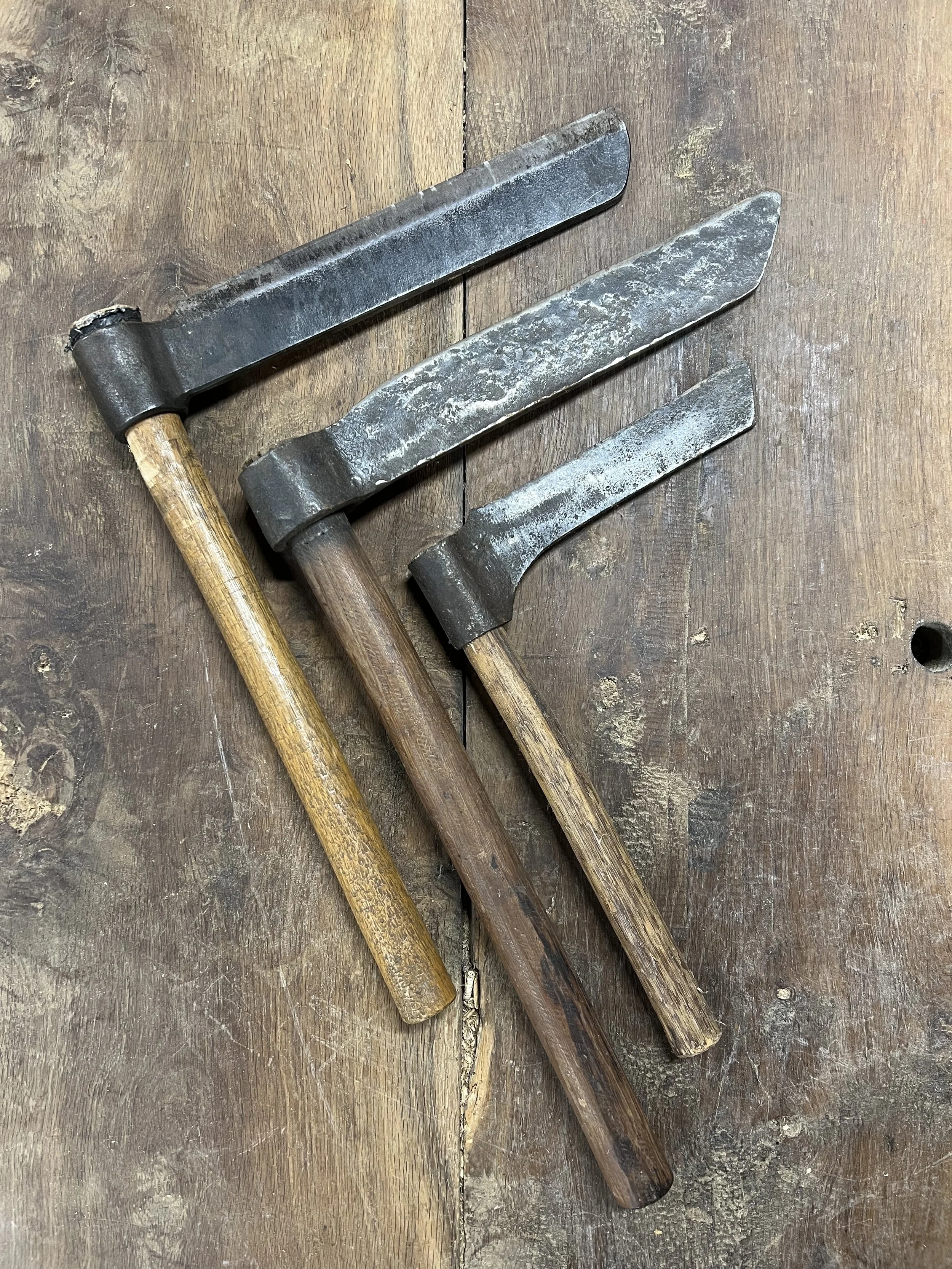
The one the left is my first froe, made by Gransfors Bruks.
An essential tool for cleaving, especially for making things such as timber frame pegs. These are to be used with a heavy wooden mallet, which you can make yourself.
Many people also make their own froes from old leaf springs. Just make sure that the bottom of the hole is wider than the top, otherwise when you strike the top of the tool it will just come off the handle!
The other two are ones that I’ve picked up at local flea markets. Make sure that you go while stallholders are still setting up for these in demand items! The smaller froe is ideal for making lighter objects in a cleaving brake such as lath for tiles or wattle panels.
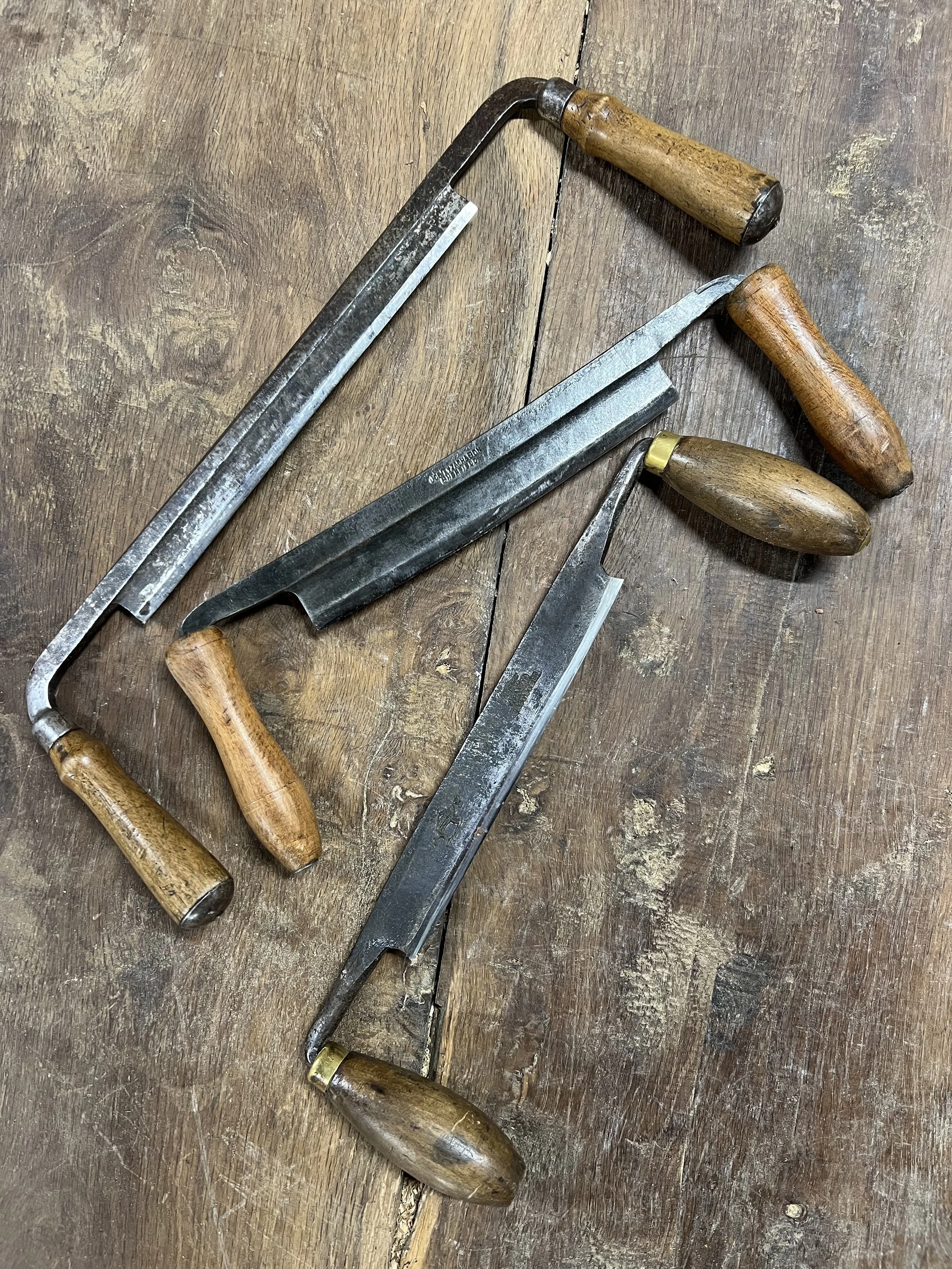
Drawknife
Paired with the shavehorse that you can make with my free plans, you can make a huge amount of things; from pegs to stool legs.
You can probably even cut your leeks for dinner with it if you want to!
Here are a selection of old ones that I’ve picked up over the years.